From a digital model to a physical prototype
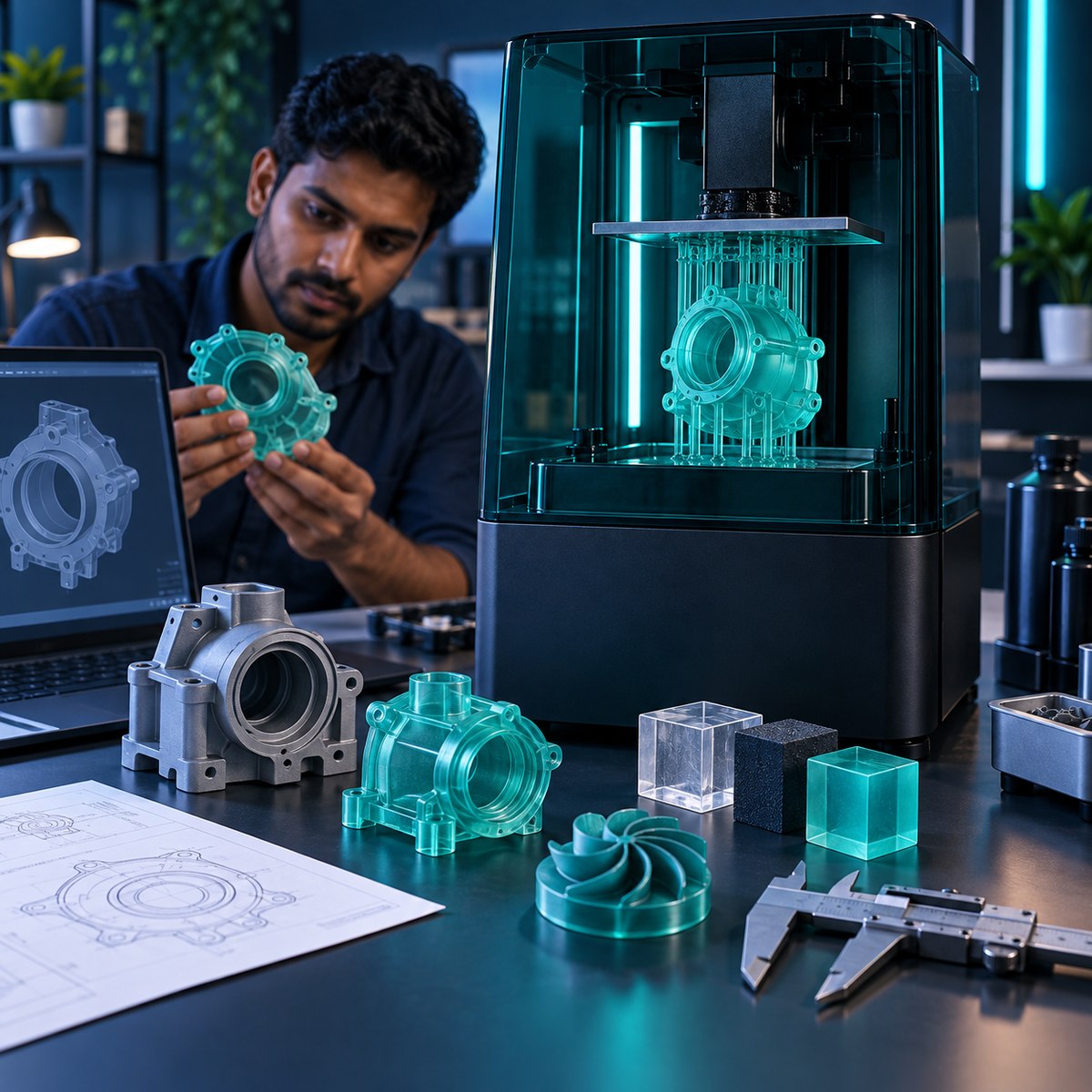
3D printing builds a part from a digital model in successive layers. It can help designers and businesses examine form, fit and presentation before committing to another manufacturing route. WinPro Lanka's current service listing covers concept validation, product enclosures, architectural or exhibition models, custom mementos and selected jigs or fixtures. The right approach depends on the geometry, scale, material, detail and intended use of the finished part.
Choose the purpose before the material
A visual presentation model, a fit-check prototype and a functional part have different priorities. A model may place more emphasis on surface appearance and fine detail. A fit-check part needs accurate dimensions at the critical contact points. A functional item may need information about load, heat, movement, environment or repeated handling. Explain what the print must demonstrate so material and finishing options can be assessed against the job rather than selected by name alone.
FDM and resin considerations
The live service listing identifies PLA, PETG, ABS and resin among the available material families. Filament-based printing can be relevant to many prototypes, enclosures, fixtures and larger forms, while resin can be considered where smaller detail or a smoother model surface is important. Material choice must still reflect the actual part and equipment capability. Do not assume that every geometry, colour or finish is available without review.
Prepare a print-ready file and dimension reference
The current service accepts STL, OBJ and STEP files. State the units used in the model and provide at least one known dimension so scale can be checked. Identify critical holes, mating faces, clearances and surfaces that must remain visually clean. If the model has thin walls, unsupported features, separate moving parts or enclosed spaces, flag them for printability review. A file that opens successfully is not automatically ready to print at the intended size.
- STL, OBJ or STEP file with the correct units and final revision name.
- Overall dimensions and any critical tolerances or mating points.
- Intended use: visual model, fit check, functional test, gift or fixture.
- Preferred material, colour, surface finish and post-processing to assess.
- Quantity, required date and whether repeated parts must match.
Prototype, revise and then repeat
For a new component, treat the first print as a controlled validation step where appropriate. Check scale, fit, assembly, labels and appearance before ordering repeated pieces. Record any model changes with clear version names so an older file is not produced by mistake. If the requirement is a short run, specify whether all pieces are identical and whether colour or finish varies. The quotation should be based on the final reviewed geometry and quantity.
What to send for a 3D printing quotation
Send the model file, dimensions, quantity and intended use together. Include photographs or an assembly drawing when the part must interact with another object, and explain which surfaces matter most. If no final file exists, state what design information is available rather than presenting a sketch as production-ready. WinPro Lanka can review the supplied brief and confirm the next step for the listed 3D printing service.
For branding a finished presentation item, compare UV flatbed printing and laser engraving and marking. Send the model and requirements for a project-specific review. Request a custom quote.